
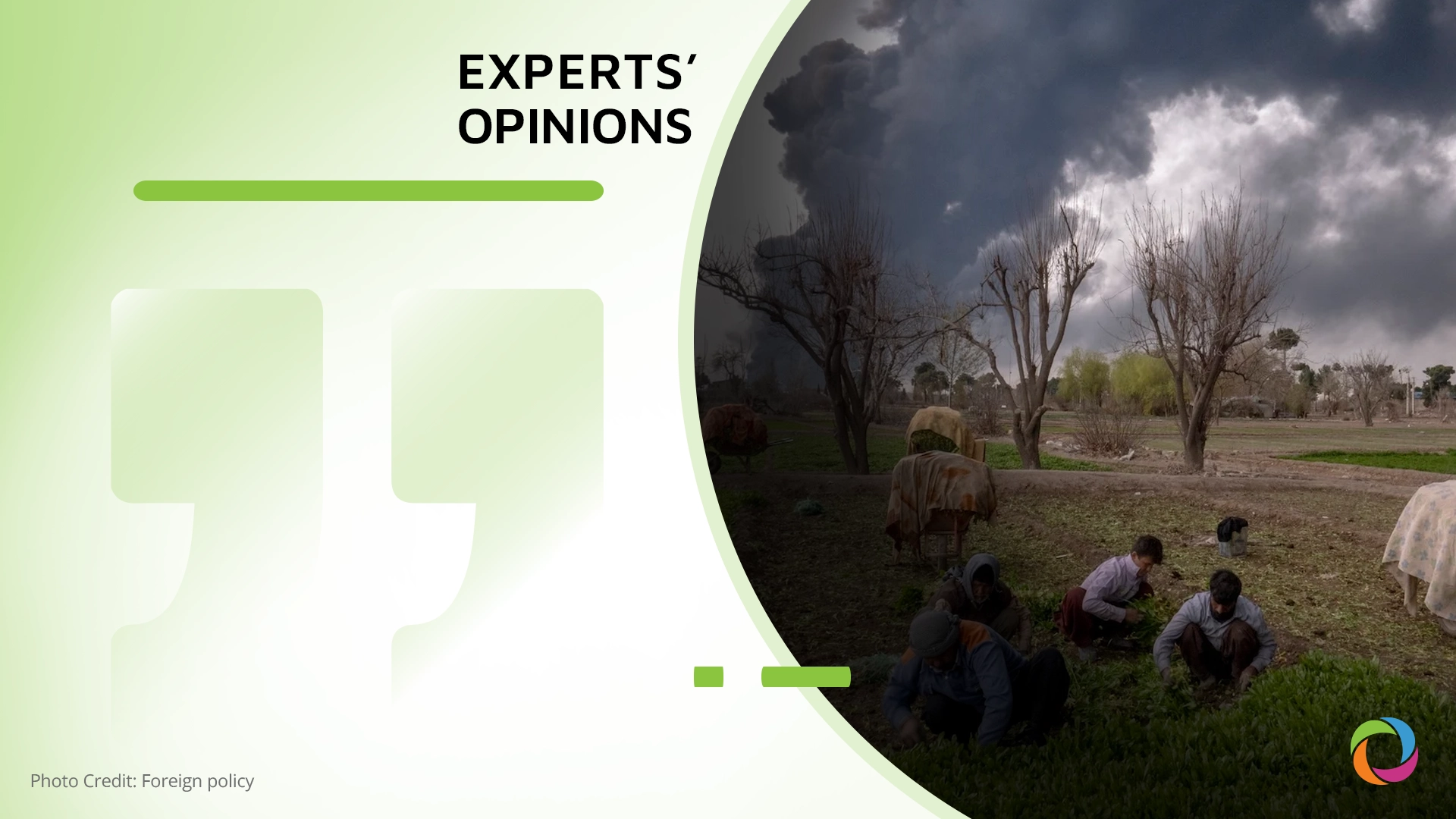
The outbreak of the Iran war on February 28, 2026 has led to the blockage of the Strait of Hormuz – a vital transport route for Gulf oil, which accounts for almost one-fifth of the world’s oil demand. But key humanitarian aid routes have also been affected, resulting in vital deliveries to some of the world’s worst-hit crisis areas, such as Yemen, being delayed. Furthermore, limited oil supplies have triggered fuel price spikes and increases in fertilizer prices and transportation costs. Together, these factors could lead to a global food crisis with the World Food Programme warning that up to 45 million more people could face acute hunger if the war in Iran continues until June. How can governments and international development organizations better prepare to respond to these shocks? Check out some expert opinions below.
Key Takeaways:
- Blocking the Strait of Hormuz between Iran and Oman remains Iran’s main ‘economic weapon’. which could throw global energy markets into chaos, as approximately 20% of the total amount of oil consumed globally passes through the strait.
- The extent to which the war could provoke a global food price shockwave depends on the scale and duration of the conflict and the response of international actors.
- If disruptions to energy markets and logistics continue, food prices will gradually rise, with the strongest impact being felt in import-dependent and economically fragile countries.
- Countries such as Egypt, Lebanon, Jordan, Tunisia, Yemen, and Sudan, which rely heavily on food and energy imports, are likely to be the first to feel the pressure.
- Experts suggest governments should quickly secure alternative supply routes and transport channels for essential agricultural inputs and key food products.
- Rather than a sharp food prices spike, the real concern is believed to be a sustained erosion of food affordability, which could deepen structural food insecurity.
DevelopmentAid: To what extent could the Iran war trigger a global food price shockwave comparable to previous crises?

“Historically, geopolitical conflicts in the Middle East have often led to volatility in energy prices which, in turn, affects agricultural production and transportation costs worldwide. Given Iran’s strategic position and its influence on global oil supplies, any conflict could severely impact the cost and availability of key food commodities. The outbreak of war involving Iran has significant potential to disrupt global food markets. The extent to which the war could provoke a global food price shock depends on the scale and duration of the conflict and the response of international actors. If the disruption resembles past crises, there is a strong possibility that global food prices could rise steeply, with significant ramifications for both producers and consumers worldwide. Previous crises, such as the 2007-2008 food price shock and the disruptions caused by the conflict in Ukraine, demonstrated how regional instability can have far-reaching consequences. These events led to sharp increases in food prices, exacerbating food insecurity in vulnerable regions. A war involving Iran could similarly trigger supply chain disruptions, further driving up prices and causing ripple effects throughout international markets.”

“The global food supply chain, responsible for feeding nearly eight billion people, is facing renewed vulnerability as the ongoing Iran war disrupts energy markets, trade routes, and agricultural inputs worldwide. Modern food systems depend on highly interconnected networks linking production, transportation, fertilizers, and global markets. The conflict has exposed how geopolitical instability can rapidly destabilize food security far beyond the immediate region. While emergency reserves and market adjustments may temporarily cushion the impacts, the crisis highlights the urgent need to strengthen resilient, localized, and sustainable food systems that are capable of withstanding geopolitical shocks in an increasingly uncertain global landscape. The evolving conflict involving Iran highlights a new phase of vulnerability in global food systems, differing from previous crises such as COVID-19 and the Ukraine war by primarily disrupting energy and agricultural input markets rather than food supply itself. While the pandemic exposed weaknesses in logistics and labor systems, and the Ukraine war constrained global grain exports, the current crisis threatens the cost structure that underpins food production worldwide. Rising oil and fertilizer prices increase production, processing, and transportation expenses simultaneously, creating inflationary pressure across entire food value chains. For import-dependent regions, such as developing economies and small island states, particularly in Latin America and the Caribbean, Asia, and sub-Saharan Africa, these compounded costs risk translating into reduced food affordability and heightened food insecurity. The situation underscores how modern food systems are increasingly shaped by geopolitical stability beyond agriculture alone, reinforcing the need for diversified supply chains, regional production capacity, and investment in resilient, climate-smart food systems capable of absorbing external shocks while safeguarding long-term food security.”

“The Iran war is unlikely to trigger an immediate price shock on the scale of COVID-19 or the Ukraine war, but it is steadily creating the conditions for a more prolonged and systemic food crisis. Its impact is largely indirect, driven by rising energy, fertilizer, and transport costs, all of which are fundamental to global food production and distribution. Unlike sudden supply disruptions, this type of pressure accumulates over time, making it less visible but potentially more persistent. If disruptions in energy markets and logistics continue, food prices will rise gradually, with the strongest impact being felt in import-dependent and economically fragile countries. The real concern is not a sharp spike, but a sustained erosion of food affordability, which could deepen structural food insecurity.”
“The Iran war could trigger a food price shock similar to previous global crises, but via a different path. In the Ukraine war, the main problem was the direct disruption of grain exports. In Iran’s case, the bigger risk is the rising cost structure behind food production and distribution. Agriculture depends heavily on diesel fuel, fertilizer, electricity, irrigation, storage, and transportation. When energy prices rise sharply, all of these costs increase together. If sea transport slows down and insurance costs continue to rise, price pressure can quickly spread through the whole food chain, from farm to table. The biggest risk may not be an immediate food shortage everywhere, but a slow and widespread affordability crisis. In low-income countries and regions that depend on imports, families may first reduce the quality of their diet and then begin to struggle to buy basic food products. In countries like Türkiye, which can produce food but still depend on imported inputs, the crisis will probably be felt through higher production costs and stronger food inflation. If this conflict continues for a long time, it could become another major reason for growing food insecurity in the world.”

“A prolonged war involving Iran and the blocked Strait of Hormuz could trigger a global food price shock of comparable scale to past crises, mainly through energy markets and trade disruptions, although the impact would vary by region. I will use the example of the Russian-Ukrainian war. As soon as it unfolded, grain and fertilizer prices rose sharply through several channels. Firstly, the blockade of Black Sea ports and export disruptions meant that Ukraine and Russia – both major global grain suppliers – exported significantly less, tightening global supply and pushing prices up. As a result, wheat prices reached record highs in March 2022, and overall food price indices surged. Secondly, fertilizer prices increased dramatically due to sanctions, supply chain disruptions, and rising natural gas costs (a key input in fertilizer production). Some nitrogen fertilizers rose from about US$260 to US$850 per ton, and overall fertilizer prices nearly tripled between 2020 and 2022. In Europe, fertilizer costs increased by around 90% in 2022, significantly increasing farming expenses. This created a domino effect: higher fertilizer prices led farmers to use less, which reduced yields and further increased grain prices. Although markets have partially stabilized since then, production and exports have not fully returned to pre-war levels. Using Ukraine as a “breadbasket” example, rising oil and petrol prices, as a result of the war in Iran, will increase the cost of sowing (fuel, fertilizers), harvesting, and transporting crops, while conflict-related constraints seen during the Russia–Ukraine War such as limited port access and logistical bottlenecks, sharply reduce exports and drive price spikes.”

“The ongoing conflict in Iran could trigger a significant global food price shock comparable to past crises, mainly through disruptions to key maritime routes, such as the Strait of Hormuz, which is essential for both energy and food trade (Notteboom et al., 2024; Soman & Balasubramanian, 2025). Disruptions here could reroute shipping lanes, increasing transportation, fuel, and fertilizer costs, which will cascade through supply chains and elevate food prices globally (WHO, 2022; Clapp, 2020). Historical evidence shows that geopolitical shocks at strategic choke points have contributed to volatile food prices, as seen during the 2007–2008 crises driven by trade shocks and rising energy prices (Headey, 2011; Headey & Fan, 2010). The rising costs of shipping, fuel, and commodities could deepen existing food insecurity, especially among vulnerable populations, leading to increased hunger and malnutrition worldwide (UNICEF, 2023; 2024). Given the interconnectedness of energy, transportation, and food systems, if diplomatic tensions persist and logistical disruptions continue, the war in Iran could indeed precipitate a crisis comparable to previous shocks, threatening global food security (Friedmann, 1993; Von Braun & Tadesse, 2012).”
DevelopmentAid: How exposed are global food supply chains to disruptions to key maritime routes such as the Strait of Hormuz?
“The Strait of Hormuz is a narrow waterway and is a crucial passage for international shipping, facilitating the movement of large volumes of agricultural commodities, grains, and food products between regions. Global food supply chains are highly susceptible to disruptions in vital maritime routes, and the Strait of Hormuz is a prime example. Any disruption to this route can significantly impede the transit of essential goods, leading to delays or shortages. The impact to food supply chains from such maritime disruptions is considerable. Events such as geopolitical tensions, blockades, or accidents within the Strait of Hormuz could restrict access and affect the timely delivery of shipments. The ripple effect of these disruptions may be felt globally, as many countries depend on imports passing through these routes. Supply chain interruptions can result in increased prices, reduced availability, and heightened uncertainty for producers and consumers alike.”
“Global food supply chains are highly exposed to disruptions in critical maritime choke points such as the Strait of Hormuz, a narrow but strategically vital shipping corridor connecting the Persian Gulf to global markets. Modern food systems rely heavily on maritime transportation, with large volumes of food moving across oceans before reaching consumers. The Strait facilitates not only a significant share of global energy trade but also essential food shipments destined for import-dependent Gulf countries with limited agricultural capacity due to arid climates and scarce freshwater resources. Because the Strait serves as the primary maritime passage for regional trade, any disruption caused by geopolitical tensions, conflict, or security risks can rapidly delay shipments, increase insurance and transportation costs, and force vessels to take longer alternative routes. These delays ripple across global supply chains, raising import costs that are ultimately passed on to consumers through higher food prices. The dependence on refrigerated and bulk cargo shipping further amplifies vulnerability, as perishable goods require precise logistics and uninterrupted transit. Overall, the analysis demonstrates that global food systems are deeply interconnected with maritime stability, and disruptions to strategic waterways like the Strait of Hormuz can quickly escalate into regional shortages and global food price shocks.”
“Global food supply chains are highly exposed to disruptions in key maritime routes due to their dependence on global trade and energy flows. The Strait of Hormuz plays a critical role not only in oil transport but also in shaping the cost structure of food systems worldwide. Even partial disruptions lead to higher fuel prices, increased shipping costs, and delays, all of which quickly translate into higher food prices and market uncertainty. The impact is particularly severe in countries that rely heavily on food imports or operate within fragile supply systems. This reveals a structural weakness in global food systems, where efficiency has often been prioritized over resilience.”
“Global food supply chains are more vulnerable to disruptions in key maritime routes like the Strait of Hormuz than many people think. These routes are important not only for energy transport, but also for fertilizers, agricultural inputs, and the logistics systems that connect producers with markets. Food production may look local, but the system behind it is deeply global. A delay in shipments or a need to use longer routes in one region can cause higher fertilizer prices, longer delivery times, and problems in production planning in other regions. This is where the weakness of global agriculture becomes clear: farmers are not part of the war, but they still pay the price through higher costs. The effects are also not equal everywhere. Countries such as Egypt, Lebanon, Jordan, Tunisia, Yemen, and Sudan, which rely heavily on food and energy imports, are likely to feel the pressure first. In sub-Saharan Africa, countries like Somalia, Ethiopia, Kenya, Niger, and Chad are particularly at risk because higher fuel, fertilizer, and transport costs affect not only farming but also humanitarian aid operations. Türkiye is in a slightly different position. Its strong agricultural base is an advantage but, because it depends on imported energy, fertilizer, and transport, it can still feel these shocks quickly. For Türkiye, the main issue is not direct scarcity, but rising costs, price stability, and the resilience of producers.”

“In my view, the current disruptions to global trade, driven by tensions in the Strait of Hormuz, highlight how fragile our energy-dependent systems really are. Asia’s heavy reliance on Middle Eastern oil — about 60% of its crude imports (Tan, 2026) — makes the region particularly vulnerable. With US$20–US$25 billion worth of petrochemicals moving through the strait annually (Mathur, 2026), any instability quickly translates into higher production costs across industries such as plastics, automotive manufacturing, textiles, and consumer goods. I believe the real concern lies in how deeply energy is embedded in supply chains, affecting everything from agriculture and fertilizer production to transportation and retail. This interconnectedness means that even moderate disruptions can fuel inflation. For example, the International Monetary Fund estimates that a persistent 10% rise in oil prices could increase global inflation by 0.4 percentage points (IMF, 2026). From my perspective, the key issue is whether these disruptions are temporary or prolonged. If the conflict in the Middle East continues, the ripple effects could extend far beyond energy markets, impacting food systems and global stability.”
“Global food supply chains are highly exposed to disruptions in key maritime chokepoints like the Strait of Hormuz, where interference with shipping can raise freight and insurance costs, delay deliveries, and constrain access to both food and agricultural inputs worldwide.”
“Global food supply chains are highly susceptible to disruptions to key maritime routes, such as the Strait of Hormuz, which serves as a vital passage for energy and food imports, especially for major economies in Asia and Europe (Notteboom et al., 2024; Soman & Balasubramanian, 2025). Geopolitical tensions, such as the Iran conflict, increase the risk of delays, rerouting, and higher shipping costs, including rising oil prices, which can significantly affect global food availability and prices (Moe-Lobeda & Spencer, 2009; Roberts, 2024). As a critical chokepoint, the Strait’s instability hampers supply chain resilience, with even minor disruptions causing ripple effects across markets, elevating fuel and freight costs, which are passed on to consumers and farmers, and heightening food price volatility (Gleason et al., 2022; Sheffi & Rice Jr., 2005). Although some regions maintain strategic reserves and alternative routes, these are costly and imperfect, meaning any delay can escalate into a broader crisis (Notteboom et al., 2024). The interconnectedness of global trade amplifies the vulnerability; disruptions here could trigger severe food shocks, similar or worse than past crises, pushing vulnerable populations into hunger (FAO, 2026; UNICEF, 2023).”
DevelopmentAid: What immediate actions should governments and development actors take to prevent a large-scale food crisis?
“In response to the escalating disruption of global food systems, governments and development actors must implement immediate and coordinated actions to prevent a large-scale food crisis with governments working closely with international agencies to ensure that humanitarian aid is delivered efficiently to areas facing the greatest food insecurity. The stabilization of food supply chains should be prioritized by facilitating alternative shipping routes and reducing logistical bottlenecks, thereby mitigating the impact of increased transport and fuel costs. Enhanced regional cooperation is essential to ensure the swift movement of essential goods across borders. Maintaining open trade policies and resisting export restrictions are critical to preventing further market volatility and shortages. Governments and development organisations need to invest in local food production and distribution systems, helping communities to build resilience against external shocks.”
“To prevent a large-scale food crisis amid escalating geopolitical disruptions, governments and development actors must prioritize immediate stabilization measures while accelerating systemic transformation toward sustainability. Safeguarding trade continuity through diplomatic coordination and maritime security remains critical, alongside strengthening strategic food and fertilizer reserves and improving market transparency to prevent price volatility. Development institutions should expand emergency financing for smallholder farmers to offset fertilizer and input price increases, preventing declines in upcoming harvests. Targeted food subsidies, social protection programs, and concessional financing can help to stabilize food access as energy and transportation costs rise. Investments in climate-smart agriculture, localized food production, and resilient logistics infrastructure can mitigate future shocks. Coordinated global action is also critical, multilateral organizations, development banks, and regional alliances must align policies linking food security, energy stability, and climate adaptation. The crisis also presents an opportunity to reduce dependence on synthetic fertilizers by investing in sustainable alternatives, including organic fertilizers, bio-inputs, and circular nutrient systems produced at scale. Increased funding for research, local manufacturing, and the adoption of regenerative practices by farmers can improve resilience while lowering exposure to global input shocks. Equally urgent is addressing food waste across the value chain. Governments should implement policies and incentives that support surplus food redistribution from hotels, large restaurant chains, catering companies, and retailers, while promoting waste-reduction programs for MSME food entrepreneurs and households. Composting initiatives at community, commercial, and farm levels can return nutrients to the soil and reduce reliance on imported inputs. Expanding support for local agro-processors and regional manufacturers will further strengthen food system resilience. Ultimately, discussions on food security are incomplete without decisive action on food waste, whose reduction can significantly cushion the impacts of global food crises.”
“The priority is to avoid policy responses that amplify volatility. Governments should keep trade channels open, coordinate the use of strategic reserves, and avoid export restrictions. At the same time, targeted support is needed to protect vulnerable populations from rising food costs. Development actors should focus not only on short-term relief but also on strengthening resilience by improving access to finance for farmers, supporting input affordability, and investing in local and regional supply chains. Strengthening market systems and reducing dependency on global shocks will be key to preventing future crises.”
“The first goal should be to prevent an energy and logistics shock from turning into a hunger crisis. Governments should quickly secure alternative supply and transport channels for essential agricultural inputs and key food products. Export bans, panic buying, and protectionist policies should be avoided because, even if they seem helpful in the short term, they usually increase price volatility around the world. Development actors should provide emergency financing for fragile and import-dependent countries, while also supporting small farmers with access to fertilizer, credit, digital advisory services, and quick technical support. Humanitarian systems should also receive flexible funding before rising costs are fully reflected in local markets. In such a situation, agricultural technologies may seem like a luxury. In fact, they are a necessity. Data-based decision-making, early warning systems, digital farming tools, and financial instruments that support producers are no longer optional. In the medium to long term, regional fertilizer production, agriculture supported by renewable energy, and more diverse supply chains should be strengthened. Food security is no longer only about production. It is also about resilience, access, and smart system design. The right steps taken today can help to prevent a deeper food crisis tomorrow.”
“I think governments must prioritize maintaining secure shipping routes, and treat food, fertilizer, and humanitarian cargo as priority traffic for alternative routing, especially as the World Food Programme warns that millions more could face acute food insecurity if conditions worsen.”
“To prevent a large-scale crisis, governments should prioritize keeping trade routes open, avoid export restrictions, and act to stabilize energy prices, while development actors should expand grain reserves, subsidize inputs for farmers, invest in alternative transport corridors, and strengthen social safety nets and humanitarian food programs to protect the most vulnerable populations. These measures were successfully taken in Ukraine, which brought stabilization of prices, but now again Ukraine is experiencing the same fuel price rises as the rest of the world which will again lead to a deterioration in food security and grain export.”
“If supply routes remain blocked or heavily disrupted, the costs of importing vital commodities will soar, risking widespread hunger and malnutrition, especially in fragile regions (UNICEF, 2023; 2024). However, to prevent such an outcome, immediate, coordinated action is critical. Governments and development agencies should implement social safety nets, such as targeted food aid and cash transfers, to buffer vulnerable populations against rising food prices (Devereux & Sabates-Wheeler, 2004; d’Errico et al., 2023). Long-term measures include safeguarding open trade routes, establishing strategic grain reserves, promoting local food production, and diversifying supply sources to reduce dependence on vulnerable chokepoints (Friedmann, 1993; Sommerville et al., 2014; Pretty & Bharucha, 2018). Investing in sustainable agriculture, climate resilience, and infrastructure would further enhance systemic resilience against environmental and geopolitical shocks (Perfecto et al., 2019; WHO, 2024). Strengthening international cooperation, especially around conflict resolution and trade facilitation, is essential for maintaining open markets and preventing a global food crisis (Schanbacher, 2010; Ogwu et al., 2024). These coordinated efforts are vital to safeguarding global food security now and in the future (Clapp, 2020; FAO, 2026; WFP, 2024; UNICEF, 2023; 2024; World Bank, 2024). Moreover, the destructive actions against nature by greedy leaders must stop through the development of anti-arms and anti-warfare policies, trade and resource allocation policies, and zero-tolerance policies for pollution to protect biodiversity, uphold zero tolerance for pollution, and prioritize human rights to safeguard culture and regional sovereignty.”
As food insecurity risks rise, organizations like the World Food Programme, UNICEF, UNDP, and INGOs could expand hiring for emergency response. In order to stay up to date with all the latest openings on the international development job market, as well as tenders and grants for individuals, DevelopmentAid offers the Individual Professional Membership. With this, members will be able to stand out from the competition by having access to a plethora of opportunities, saving time and resources. Aside from that, members can check salary trends, access organizations and donors’ contact details, gain increased visibility for their profiles and be up to date with all the latest news in the sector.
