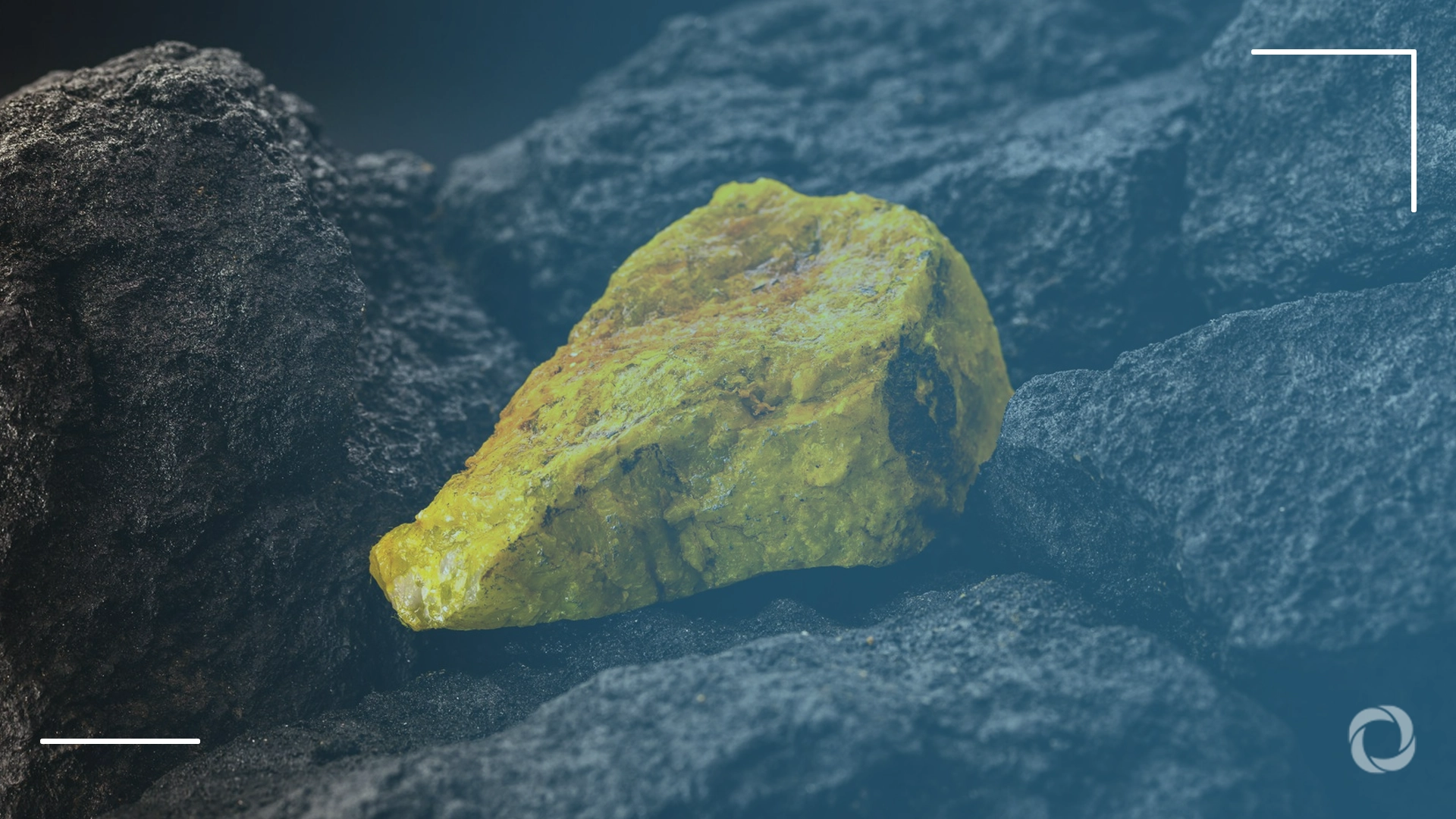
Uranium is an essential element for generating 10% of the world’s electricity output and for the operation of numerous vital industries such as healthcare and criminology. Being a radioactive element, it serves as fuel for nuclear reactors, which use the heat generated by its radioactive decay to produce energy. It is not a fossil fuel because it is not formed from ancient organic matter. It is a heavy metal and is present in most rocks, soil, water, and even in human bodies.
Uranium is classified as a non-renewable energy source due to its finite quantity. Today, several countries have emerged as the world’s top producers of this essential resource, bolstering global economic growth and energy security.
According to the World Nuclear Association, the total volume of recoverable uranium resources in the world is 7.9 million metric tons of uranium (tU).
Did you know that the modern story of uranium mining started in the 1940s (mostly to use it for weapons), according to the U.S. Environmental Protection Agency?
The table below shows cumulative production estimated by the World Nuclear Association between 1945 and 2024:
* Until 1991, the Union of Soviet Socialist Republics–USSR encompassed the uranium produced in the former Soviet Republics, including Russia, Kazakhstan, Uzbekistan, and Ukraine.
Uranium in international development
When electricity is produced, most technologies release carbon dioxide (CO2), which is one of the main sources of air pollution. The rate of CO2 footprint of a certain technology is estimated in “grams of CO2 per kilowatt-hour (kWh)”, meaning how much pollution is produced for each unit of electricity generated.
That being said, nuclear power is extremely clean in this regard, being twice cleaner that solar and 70(!) times cleaner than coal plants.
Uranium is the basic fuel for nuclear reactors that generate electricity. It is particularly important for countries that wish to cut carbon emissions and switch to low-carbon energy sources 1 kW of nuclear-generated electricity has a footprint of 12 gCO2, compared to the 24 gCO2 equivalent of one solar-powered kilowatt and 820 gCO2 of one coal-powered kilowatt. This is why it is an important element of the net-zero carbon emissions initiative.
This data is accurate as scientists are being fair when estimating all the emissions involved. In addition to calculating emissions while the plant is running, they also take into account the CO2 spent building it, mining the uranium, and eventually tearing it down.
Median life-cycle carbon-dioxide (CO2) equivalent emissions
The table below shows the numbers from the Intergovernmental Panel on Climate Change (IPCC) that analyzed many independent studies to find an average.
Source: World Nuclear Association
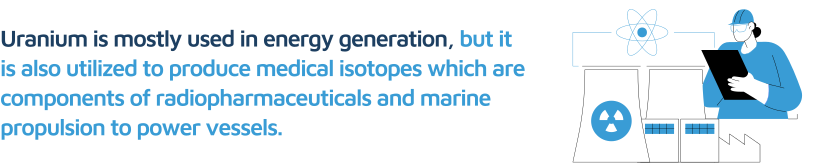
In terms of international economic development, uranium is an important income source for exporting countries, with millions of people engaged in the nuclear industry.
- The number of people employed in the global nuclear power industry reached 1.1 million in 2023, which represents a 6% increase compared to 2022, according to the World Energy Employment 2024 from the International Energy Agency (IEA). To put that in perspective, the energy sector as a whole employs 76 million workers (based on the 2025 report for IEA).
- In 2024, the total output of uranium around the world reached 60,213 tU, based on data from the World Nuclear Association.
- Currently, conventional mining accounts for 44% of uranium production, in situ leach (solution mining) accounts for 52%, and 4% of uranium is a by-product of other mineral extraction processes.
Top uranium producers
Let’s examine the top 10 major uranium producers and their contribution level. The figures were sourced from the World Nuclear Association’s 2025 (January) update.
Uranium production by country from mines (tU)
As new information becomes available, the numbers in this table may change. Because of rounding, totals might not add up exactly.
Source: World Nuclear Association
Kazakhstan is by far the world’s greatest producer of uranium, with an output of about 23,270 tU per year (as of 2024).
It accounted for around 38.7% of the global uranium supply in 2024, with Canada second (23.8%), followed by Namibia (12.2%).
Let’s take a closer look at each country in the list.
 Kazakhstan
An Asian landlocked country the size of Western Europe, Kazakhstan contributes around 39% of the global output of uranium due to its vast uranium deposits and well-established mining industry.
The country became the number-one uranium producer in 2009, and it has been producing it for the last 50 years. In 2019, due to the COVID-19 impact, the production levels slightly decreased, registering a figure of 19,477 tU, but in the years that followed, the levels got back up.
Its production level has reached 23,270 tU in 2024. According to National Atomic Company Kazatomprom, the year 2025 showed a production of 25,839 tU.
The nation is expected to continue to dominate the uranium market, with output levels predicted to reach between 27,000 and 29,000 tU in 2026.
Today, Kazakhstan accounts for 14% of the global uranium reserves.
Exports: Kazakhstan exports uranium to Asia (mainly China, India, and South Korea), North America (the U.S. and Canada), and the European Union.
 Canada
For years, this North-American country has remained one of the leading powers in nuclear research and technology. It has exported its reactor systems as well as a large share of the global supply of radioisotopes, used in medical diagnosis and cancer therapy.
It’s worth noting that around 15% of the country’s electricity comes from nuclear power. The majority of its power plants are located in Ontario.
The level of uranium production in the world’s second-largest country by surface has remained largely stable over the last few years.
Two of its mines, McArthur River and Cigar Lake, both located in Saskatchewan (a Canadian province), are among the largest uranium-producing operations on Earth.
Although Saskatchewan is the source of all Canadian uranium, the processing of the radioactive metal, its refining, conversion, fuel production, research, and waste management take place in multiple regions throughout the country.
In 2024, the level of uranium production in Canada reached 14.3 kilotonnes, boasting a production value of around CAD$3 billion (US$2.2 billion).

Exports: The main markets for Canadian uranium are North and South America (64%), Asia (19%), and Europe (17%).
 Namibia
The southern African nation of Namibia has been a major player in the world uranium production sector for a number of years. It is the third-biggest producer of uranium, representing 12.2% of total production in 2024.
Even though uranium was discovered here in 1928 (in the Namib Desert), extensive exploration began in the late 1950s, and there was a great deal of interest in Rössing – one of the world’s largest and long-running open-pit uranium mines.
The nation’s first commercial uranium mine started its operation back in 1976. Today, the country benefits from government assistance in growing its uranium mining capabilities.
Exports: In 2023, the main destinations for uranium exports from Namibia included the BRIC region (Brazil, Russia, India, and China), with the OECD second and the EU third.
In January 2026, Uranium was the nation’s largest exported commodity (26.3% of total exports value), with the major importers being China and France, according to Namibia’s Market Watch.
 Australia
Australia boasts the world’s largest known uranium reserves on Earth (1.6 million tonnes, 28%), accounting for almost one-third of the entire global supply, but it’s not the top producer, and surprisingly, doesn’t use nuclear power itself.
Australia exports all of its uranium. In 2024, the production volumes were 4,553 tU, slightly less than in 2023 (4,693 tU), and nearly at the same level as in 2022 (4,598 tU).
In the 1930s, people dug up ores to get radium for medical purposes, and at that point in time, uranium was more of a by-product. Active mining for this radioactive heavy metal started in the 1950s. A second wave of exploration, a decade later, found about 60 deposits, driven by the growth of civil nuclear power worldwide.
Exports: Australia’s uranium mostly goes to the United States (up to 5,000 t/year), the European Union and the UK (up to 3,500 t/year), Japan (up to 2,500 t/year), and South Korea (up to 1,500 t/year). Other regions include China, Taiwan, and India.
 Uzbekistan
Uzbekistan is the world’s fifth-largest uranium producer, and it plans to expand its capabilities by building two large and two small Russian reactors in the near future, according to The Times of Central Asia.
Before the country gained its independence in 1991, it was one of the largest sources of uranium in the USSR.
Nowadays, the majority of uranium is mined near the country’s center, in the city of Navoi, which is connected to mines via rail.
In July 2022, the country’s president issued a resolution to expand uranium output from 3,500 to 7,100 tU by 2030. In December 2025, President Mirziyoyev directed officials to complete a feasibility assessment on a recently discovered uranium deposit at Arnasay (a district of Jizzakh Region in Uzbekistan).
Export: Before 1992, all of the uranium produced in the country was sent to Russia. After 1992, the United States, along with a number of European and Asian countries, became the importers of nearly all of the uranium.
 Russia
Russia currently ranks sixth in terms of uranium production. The country features considerable reserves of uranium as well, with an estimated 476,600 tU. In addition, it plans to continue its development of new nuclear technology
According to the World Nuclear Association, the country currently has around 20 projects involving the construction of nuclear reactors around the world.
There are 34 operational reactors in Russia, and Rosenergoatom* is the sole Russian company running nuclear power facilities.
*Rosenergoatom is a subsidiary of Atomenergoprom responsible for nuclear power station operations. Atomenergoprom, in turn, is a state-owned holding company and a part of the Rosatom state corporation.
Exports: In 2024, Russia exported uranium to China, South Korea, the United States, Kazakhstan, Germany, and France.
 China
China
Even though today it ranks seventh, China has set the goal of becoming self-sufficient in nuclear power plant capacity and in the production of fuel for its new plants.
The country’s strategy is to produce around 30% of its uranium domestically, another around 30% will be acquired through Chinese-owned interests in overseas mines, and the remaining third will be bought on the open market.
Since the demand for uranium is so high, China has been buying majority stakes in major uranium mines located in Namibia, Kazakhstan, and Niger. In addition, the country is investing in Canadian uranium developers.
China is also developing two nuclear fuel industrial parks to combine enrichment, conversion, and fuel manufacture under one roof, intending to become Asia’s nuclear fuel production hub.
China mostly imports uranium, and is not a huge exporter of this radioactive heavy metal, even though it produces some uranium within its borders.
 Niger
Niger
Niger has two major uranium mines, which provide around 5% of global mining production from Africa’s highest-grade uranium ores. So it should be of no surprise that it ranks eighth in the list of top uranium producers.
The first commercial uranium mine in the country started its operation back in 1971. For decades, this West African nation has been a huge player in uranium production.
Orano, a French state-controlled firm, operated major uranium mines and owned the majority of the SOMAIR (Société des Mines de l’Aïr) mine. Relations between Niger and France deteriorated following the military coup in 2023.
The new government accused the French company of unfair practices and decided to take over the mine’s operations in 2024-2025. Niger declared in February 2026 that it was prepared to hand over the uranium Orano had produced before the takeover, while retaining ownership of all uranium produced afterward.
Today, the nation looks forward to gaining more control and profit from the natural resources mined within its borders, decreasing foreign control over its uranium industry.
 India
India
Although India ranks ninth among countries that produce the most uranium, it still faces a challenging situation. It has modest domestic resources and imports a lot to meet its high demand for uranium.
But this wasn’t always the case. For 34 years, India was excluded from international nuclear trade because of its weapons programme, which forced it to rely solely on scarce domestic supplies, says the World Nuclear Association. This restriction was lifted after the 2008 Nuclear Suppliers Group (NSG) waiver.
After 2008, India actively diversified its supply, signing agreements with Russia, France, Kazakhstan, Uzbekistan, Canada, Australia, Namibia, and Mongolia.
According to India’s authorities, the answer to uranium scarcity in the country lies in transitioning to a thorium-based fuel cycle. It’s worth noting that India has abundant thorium reserves.
For the most part, India imports uranium and cannot be considered its exporter, since its reserves are modest, and its mines cannot produce enough uranium to satisfy the nation’s needs.
 USA
USA
Last in the top 10 list, the United States has more nuclear reactors in operation than any other country. However, its domestic uranium mining is far from what it once was. Uranium production in the country reached its highest point in the early 2010s (around 1,900 tU/year), but then it collapsed to only 6 tU in 2020.
Low worldwide uranium prices, which made domestic production unprofitable, were a major factor in the drop. Today, we can witness a modest recovery, with output reaching 260 tU in 2024.
Still, there is a serious legacy issue as well. Hundreds of mines from the 1950s weapons program were left unused, which led to radioactive contamination that requires cleaning.
The largest share of uranium output comes from Wyoming’s Powder River Basin.
Uranium reserves by country: where are the largest deposits?
Source: World Nuclear Association
Top 10 largest uranium mines by production
Kazakhstan, Canada, and Namibia account for almost three-quarters of the global uranium mine output.
GlobalData reports that there are currently around 97 active uranium mines worldwide. These 10 uranium mines are ranked highest in the world in terms of production as of 2024.
Source: World Nuclear Association
Uranium prices and the nuclear energy outlook
Uranium prices
Prices spiked to US$101.41/lb (~$224/kg) in January 2026, and then pulled back to around US$85.50/lb on February 5 (~$190/kg), according to Investing News.
However, the supply is tightening, with Kazakhstan’s Kazatomprom lowering its production plan for 2026, and the U.S. in-situ recovery (ISR) mine restarts have progressed more slowly than anticipated, moving the market from an inventory-driven to a production-oriented strategy.
AI and data centers increase uranium demand
Nuclear energy is currently regarded as critical to fulfilling rising electricity demand from the expanding AI infrastructure.
As more and more tech companies perceive nuclear as an optimal power source, uranium demand rises to a new, long-term level. Analysts predict that the uranium industry will rise to US$60.5 billion by 2030, with AI-driven demand driving the expansion.
In addition, tech giants are working on huge nuclear power deals to run their data centers:
- Meta managed to seal several agreements to secure up to 6.6 gigawatts (GW) of nuclear power by 2035.
- Amazon and Talen Energy (an independent power producer operating nuclear, gas, and oil plants) signed a Purchase Power Agreement (PPA), under which Talen would supply Amazon with 1.9 GW of electricity from its nuclear power plant to AWS data centers.
- Google is restarting old plants that stopped operating several years ago.
New nuclear reactors around the world
- The U.S. Department of Energy awarded US$400M each to TVA (Clinch River, Tennessee) and Holtec (Palisades, Michigan) for two small modular reactor projects. The target is 400 GW of nuclear capacity by 2050, says World Nuclear News.
- In Canada, construction of the SMR at Darlington station is underway.
- China inaugurated a new nuclear power plant in Guangdong (as of April 2026). And, according to authorities, the country can potentially construct up to 50 nuclear reactors simultaneously.
- Russia continues to export its nuclear power, with the help of state subsidies and low competition.
- In the EU, the European Commission in March 2026 announced a strategy to speed up the construction and deployment of Small Modular Reactors (SMRs) and Advanced Modular Reactors (AMRs) throughout Europe (COM/2026/117).
- In April 2026, the UK announced that Great British Energy – Nuclear (UK government-owned nuclear energy and fuel enterprise) had signed a deal with Rolls‑Royce SMR to start designing SMR, which is a part of the Government’s clean energy mission.
Frequently asked questions about uranium production
Where does the USA get most of its uranium?
The United States imports nearly all of its uranium from abroad. According to the EIA’s Uranium Marketing Annual Report, Canada is the number one source of uranium for the US, followed by Australia and Kazakhstan. The Department of Energy plans to revive domestic production. However, this might take years.
Who is the biggest buyer of uranium?
The major buyer of Uranium is the United States, which imports around 95% of the uranium it uses. Canada contributes to around a third of total uranium shipments (based on data from Canada Energy Regulator), followed by Australia and Kazakhstan with 22% each, and Russia with 12%, according to World Nuclear News.
What is in-situ leaching?
In-situ leaching (ISL), which is also called solution mining, is the process that includes the extraction of uranium without excavating rock. The mineral is recovered by injecting a pregnant leach solution (PLS) into the uranium-bearing formation underground. The solution then dissolves the uranium in place. Then the uranium-rich liquid is pumped to the surface for processing.
Final word
Along with the increasing demand for electric energy, the role of uranium in fueling nuclear reactors is becoming more important, particularly in view of the fact that increased energy availability and consumption are driving economic development.
The biggest uranium-producing countries, therefore, contribute significantly to the world’s energy security. By producing and exporting uranium, they also partly serve as economic growth facilitators.
Understanding the contributions of these nations to international economic development helps to understand the intricate relationship between the world’s energy needs and the significance of smart resource management to ensure a sustainable future.